U1
Verbatim
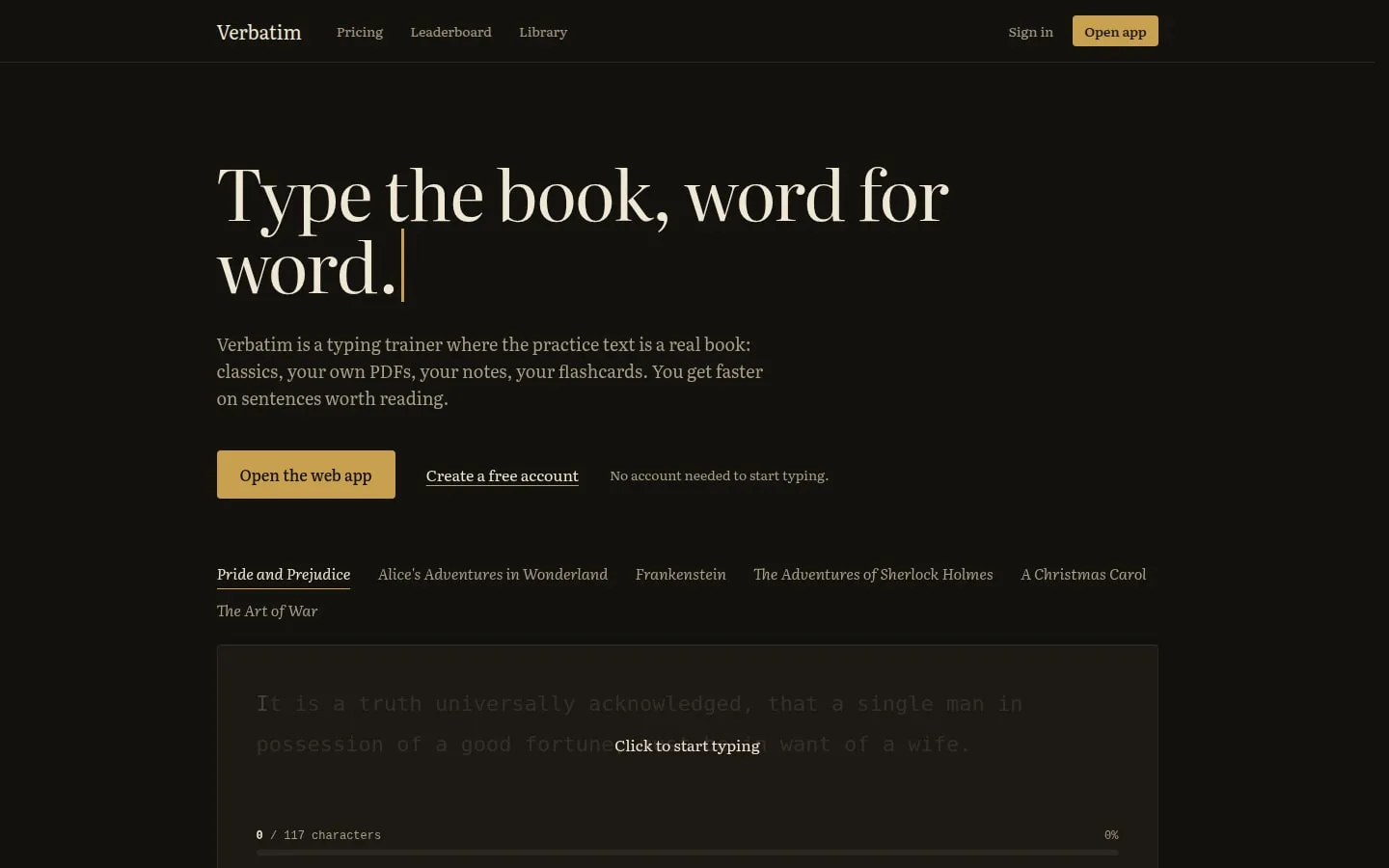
A typing trainer where the practice text is a real book. You type classics, your own PDFs, your notes, or your flashcards, page by page.
- Year
- 2026
- Role
- Creator. Product, front end, API, and deployment
- Stack
- TypeScript
- React
- Vite
- Tailwind
- Hono
- Cloudflare Workers
- Postgres
- Stripe
- Links
- Visit site
Most typing trainers hand you random words. Verbatim hands you a book. You pick a public-domain classic, upload a PDF, paste your notes, or load a set of flashcards, and you type it page by page. Your place is kept, and finished pages count toward a level, a streak, and three leaderboards.
How it is built
- Typing engine. A tokenizer, a session reducer, and the stats, written in plain TypeScript with no DOM so it can be tested on its own.
- Parsers. Text, PDF, and flashcard parsers turn any source into chapters and pages.
- Web app. React and Vite, styled with Tailwind. It is local-first: everything a guest does is stored in the browser with IndexedDB, so it works without an account and without the API.
- API. Hono on Cloudflare Workers with Postgres behind it. It handles accounts, session sync, leaderboards, the daily quote, and billing through Stripe.
- Desktop. An Electron shell runs the same app offline.
What I would point a reviewer at
The engine and the parsers are separate packages from the interface, and the API tests run every query against a real Postgres with the real migrations.